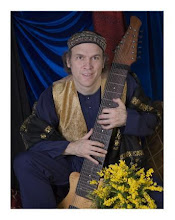
Here's a post I contributed to a discussion about Halal meat on beliefnet
Doesn't the Koran say that it is permissible to eat Haram food when that is the only way to avoid starving? This may be a bit of a stretch, but it seems to me that when you eat Haram food believing it to be Halal you're eating of the food is unavoidable, in much the same sense. If you believe that eating Halal is an essential part of your spiritual path, I think you need to be reasonably rigorous in making sure that the food really is Halal. The Medieval Christian writers spoke of seven virtues, one of which is Prudence (i.e. careful practical intelligence.) If you've got good evidence that a particular food item is not Halal, you have a moral obligation to use your common sense and wisdom to weigh that evidence carefully. But there has to be an outside limit as to how much time you should spend doing that kind of research. We also have other obligations as a citizen, husband, father etc. that should not be compromised by compulsive attempts at certainty. I think this is pretty much Abdullah's point. Nice to see we finally agree about something.
My spiritual path is Vajrayana Buddhism and we are given many different kinds of spiritual practices to choose from. We have teachers who are celibate monks who don't drink alcohol, and "House holder" Yogis who raise families, drink and otherwise remain part of the world. But everyone agrees that if you make a commitment to a spiritual practice, you should take it seriously and follow it to the letter. I salute all Muslims who have the self-discipline to choose and follow through the most rigorous aspects of Islamic practice.
We Vajrayana Buddhists, are however, fairly lax about whether or not our practices come from "false" prophets. We believe that sincere and pious devotion to a "false" prophet is better than a twisted misinterpretation of any "true" prophet. We have a story about a Tibetan Merchant whose mother asked him to bring back a relic of the Buddha's from India. He forgot to bring the relic, so he found a dogs tooth in a skull by the road, wrapped it in a silk scarf and told his mother it was one of the Buddhas teeth. She was delighted,and she and her friends prayed to it every day. Eventually the tooth began to radiate a powerful spiritual light. The point of this story is it was the faith and motivation focused on it that made the tooth holy, not it's history of belonging to Buddha or a dog. I think that this is equally true of dietary practices followed by many religions, and I have no doubt that many Muslims have benefited from the devotion required to follow the rules of Halal.
Wednesday, February 2, 2011

Sunday, December 12, 2010
Muhammad and Genital Mutilation
I followed up a link to what was called an "excellent balanced article regarding Islam" by a poster on beliefnet. I'm not going to include the link on this papge, because only a person who hates and fears Islam would consider this article balanced. It is full of highly insulting and inflammatory comments about Islam and Muslims, treating both as a scourge that threatens to engulf all of Western Civilization. Most importantly, none of these comments are backed up by footnotes, and I am certain that at least one of them is completely fabricated:an alleged Hadith in which Muhammad praises genital mutilation. The Arabs of Muhammad's time and place did not practice genital mutilation, so Muhammad would have had no reason to praise that practice, if he had heard of it at all. This is an African practice, and is done only by Sub-Saharan Africans and some Arabs who live in Africa. i.e. Egypt. The fact that this article contains such an obvious falsehood gives good reason for dismissing the rest of its alleged facts.
Saturday, December 4, 2010
Muhammad the Reformer
A New York Times Article describes how Iran has instituted Needle exchange and Methadone programs to help combat AIDs and drug abuse. How does a doctrinaire theocracy manage to overcome the moralistic objections that have made it so hard to start these programs in the West? Here's one quote of interest.
No matter what the regime, Iran’s medical schools have emphasized real science. “When I look at other countries I see lots of power interference from religion in public health,” said Bijan Nassirimanesh, a harm-reduction pioneer in Iran and founder of Persepolis, a drop-in harm reduction center in Tehran. “You don’t see that in Iran except for sex education. The foundation (of science) was so strong that it became a shield.”
In the "enlightened" USA there is not a single Republican Congressman that accepts the science of global warming. Apparently the foundation for science isn't as strong here.
Another quote confirms something I have definitely noticed in my own studies of Islam.
There is a rule in Islam that between bad and worse, you have to accept bad.
This is a principle that runs through all of Muhammad's teachings. Muhammad knew he couldn't get full equality for women. Consequently, he settled for giving women partial rights, while affirming that the rest of the patriarchal system should remain in place, to placate his male patriarchal followers. The unequal distribution of inheritance replaced a system in which women not only couldn't inherit at all, but were often inherited as property themselves. The passage in the Koran on corporal punishment for wives lists a series of things that men must do before they are permitted to use corporal punishment. (And according to some translators, doesn't mention physical force at all). Muhammad did not abolish slavery, but instituted reforms that permitted slaves to sue their masters in court if they were mistreated.
Sadly, many contemporary "conservative" Muslims are insisting that Muhammad's first steps towards reform be frozen in place, and have thus portrayed this great reformer into a reactionary.
Wednesday, November 17, 2010
Apostasy in Islam
Loonwatch has done the best scholarly research on Apostasy in Islam I have ever seen. These Guys rule. Careful reasoned attacks of the Loons on both sides of this controversy. Among its many useful resources is a link to a petition which renounces the idea that Islam requires death for Apostates. This petition was signed by over a hundred prominent Muslim clerics. Here's an important quote from that petition.
Undeniably, the traditional position of Muslim scholars and jurists has been that apostasy [riddah] is punishable by death. The longstanding problem of the traditional position, as held by Classical jurists or scholars, can be explained and excused as not being able to see apostasy, an issue of pure freedom of faith and conscience, separate from treason against the community or the state. However, the accumulated experience over the history in terms of abuse of this position about apostasy even against Muslims as well as the changed context of a globally-connected, pluralistic society should help us appreciate the contemporary challenges in light of the Qur'anic norms and the Prophetic legacy. In this context, while the classical misunderstanding about this issue of apostasy is excusable, the position of some of the well-known contemporary scholars is not
Undeniably, the traditional position of Muslim scholars and jurists has been that apostasy [riddah] is punishable by death. The longstanding problem of the traditional position, as held by Classical jurists or scholars, can be explained and excused as not being able to see apostasy, an issue of pure freedom of faith and conscience, separate from treason against the community or the state. However, the accumulated experience over the history in terms of abuse of this position about apostasy even against Muslims as well as the changed context of a globally-connected, pluralistic society should help us appreciate the contemporary challenges in light of the Qur'anic norms and the Prophetic legacy. In this context, while the classical misunderstanding about this issue of apostasy is excusable, the position of some of the well-known contemporary scholars is not
Not your Father's Hajj
This is a comment I made on a nice beliefnet post called Not my Father's Hajj The author discussed the fact that the trip to Mecca he took recently was both more comfortable and more commercial than the Austere pilgrimage he made as a boy with his father.
It's really nice to see a discussion about the heart of Islam, which ignores the trivial issues of clothing etc. that often dominate discussions in the mainstream media. Thanks for this thoughtful post.
The question between good modernizations of traditions and bad ones is a complex one, that runs through all religions and many non-religious aspects of life as well. Because I am not a Muslim, anything I say about this topic must be accepted with not only grains of salt but huge handfuls. Nevertheless, I feel inclined to offer my comments, and humbly hope they might be interesting, and perhaps even useful.
The way you describe your first Haj seems to imply that it had many of the benefits of Ramadan: a kind of ritualized deprivation which brings one face to face with our own vulnerability, and inspires compassion for those who are less fortunate. I think there is something that can be received from that kind of pilgrimage that would not be received from looking down on Makkah from an air conditioned room while drinking Starbucks coffee. If I were a Muslim, I would try to approximate the first kind of experience in my own Haj, and would encourage other Muslims to do so if they could. Nevertheless, the Koran specifically says that people are exempt from Haj if they are too weak or sick to make the journey. Making the Haj more comfortable makes it possible for many people who would not have the strength to otherwise go, and I think that Muhammad would have approved of that. I think it's a good thing to make one's own Haj as austere as possible--as long one doesn't fall into the trap of becoming smug, and looking down on those who for whatever reason decided to take a more comfortable route.
The issue of the shops around the Masjid al-Haram is more complicated. I think it's a good thing to preserve old buildings, and a bad thing to sacrifice them to make a few bucks. Nevertheless, I can't see those aesthetic considerations as being equivalent to religious laws. If there have always been commercial buildings around the Haram, I can see no reason why new ones should be seen as more unreligious than old ones. We have to be careful about creating new religious prohibitions which change religion in the name of preserving it. Perhaps part of the challenge of the Haj is to maintain a spiritual sense while surrounded by elements of commerce.
Tuesday, October 26, 2010
What is Sharia Law?
I put up the following post on the NYtimes discussion board on Stanley Fish's column on the relationship between Shariah law and American Law:
It's amazing that so much discussion takes place over Sharia Law by people who have no idea what it is, whether or not the term refers to a single consistent point of view, or whether there are any significant number of U.S. Muslims who want Sharia law. I include myself in this category, but I'd like to clear up my ignorance on this topic. I do know that Saudi Arabia, Iran, and the Taliban had significantly different ideas of what it consisted of. (although they are all pretty vile in their respective ways.) Isn't it possible that there are other interpretations of Sharia Law which are not that different from American Law? And how many Muslims in America actually want Sharia? Has anyone taken a poll? I have never seen a single demonstration in America demanding it. My guess is most US Muslims came here to get away from it.
Later I discovered another poster had given me something like an answer to my question:
"Must a devout Muslim choose between his or her faith and the letter of the law of the land?"
NO - and that's from Islamic doctrinal perspective.
When Muslims migrate to countries not governed by Islamic sharia or tradition (yes, there are Muslim countries that do not embrace sharia law), they are commanded to obey the laws of the country they reside in as long as those laws do not prevent them from carrying out their basic duties as Muslims.
To use some simplistic examples, under sharia it is permissible but not required for a man to have up to four wives. A man can have one wife and still be able to fulfill all his duties as a Muslim in any country. Therefore, according to Islam, he needs to follow US law and marry only one wife and duly punished under US law if he chooses to flout it.
On the other hand, if a law were passed that every person has to eat bacon with every meal then the law is in direct conflict with some of the basic tenents of Islam and Muslims are exhorted to move away from areas where laws conflict with religious practice.
France is a more nuanced case because of the burqa ban. The Quran directs women to "dress modestly" but does not explicitly advocate a burqa - that's a tradition passed on from the Saudis. The burqa vs niqab debate is still ongoing in the Muslim world, so technically the jury is still out on whether one can live as a devout Muslim there. Of greater concern is that a country felt it had to single out a minority religion for discrimination.
As a Muslim I find it ridiculous Prof Fish has decided to make an issue of a problem that does not exist. If he had simply looked into actual Islamic law, he might not have had to write this column as yet more fodder for the Tea Partiers. And for the record, no, I do not have references for my assertions. This was all taught to me long ago in my Islamic studies class in a muslim country (Pakistan).
It looks like I'm going to have to start reading about Sharia law these days, given that so many apparently unfounded statements are being made about it.
Saturday, September 25, 2010
Muslims and Free Speech
Aziz Poonawalla has co-authored a petition for muslims endorsing the principle of Free speech, specifically naming those who have been drawing caricatures of Muhammad. Here it is, in full.
I am proud to co-publish and add my name as a signatory to this statement upholding the principle of free speech and denouncing those who would threaten violence in the name of Islam. If you would like to add your signature, please send an email with your name, title, and organizational affiliation (if any) to Sheila Musaji, tameditor@aol.com.
A DEFENSE OF FREE SPEECH BY AMERICAN AND CANADIAN MUSLIMS
We, the undersigned, unconditionally condemn any intimidation or threats of violence directed against any individual or group exercising the rights of freedom of religion and speech; even when that speech may be perceived as hurtful or reprehensible.
We are concerned and saddened by the recent wave of vitriolic anti-Muslim and anti-Islamic sentiment that is being expressed across our nation.
We are even more concerned and saddened by threats that have been made against individual writers, cartoonists, and others by a minority of Muslims. We see these as a greater offense against Islam than any cartoon, Qur'an burning, or other speech could ever be deemed.
We affirm the right of free speech for Molly Norris, Matt Stone, Trey Parker, and all others including ourselves.
As Muslims, we must set an example of justice, patience, tolerance, respect, and forgiveness.
The Qur'an enjoins Muslims to:
* bear witness to Islam through our good example (2:143);
* restrain anger and pardon people (3:133-134 and 24:22);
* remain patient in adversity (3186);
* stand firmly for justice (4:135);
* not let the hatred of others swerve us from justice (5:8);
* respect the sanctity of life (5:32);
* turn away from those who mock Islam (6:68 and 28:55);
* hold to forgiveness, command what is right, and turn away from the ignorant (7:199);
* restrain ourselves from rash responses (16:125-128);
* pass by worthless talk with dignity (25:72); and
* repel evil with what is better (41:34).
Islam calls for vigorous condemnation of both hateful speech and hateful acts, but always within the boundaries of the law. It is of the utmost importance that we react, not out of reflexive emotion, but with dignity and intelligence, in accordance with both our religious precepts and the laws of our country.
We uphold the First Amendment of the US Constitution and the Canadian Charter of Rights and Freedoms. Both protect freedom of religion and speech, because both protections are fundamental to defending minorities from the whims of the majority.
We therefore call on all Muslims in the United States, Canada and abroad to refrain from violence. We should see the challenges we face today as an opportunity to sideline the voices of hate--not reward them with further attention--by engaging our communities in constructive dialogue about the true principles of Islam, and the true principles of democracy, both of which stress the importance of freedom of religion and tolerance.
A master copy with the complete list of signatories to this statement is available at The American Muslim website. If you would like to add your signature, please send an email with your name, title, and organizational affiliation (if any) to the Editor at The American Muslim, Sheila Musaji (tameditor@aol.com).
Amongst the responses were the usual urban legands that pass for Islamophobic scholarship, and demands for even more statements from Muslims about Hamas. etc. The expression "Moving the Goalposts" seems appropriate here. Whatever moderate Muslims do, there's no acknowledgment of the progress, only demands for more.
There's also a link in one of the posts to a site called Loonwatch Which is a Muslim response to sites like Jihad watch. The tone of the site is somewhat angry and abusive,(but no where near as bad as the average Islamophobe site, but there are some good facts on it, written by Muslims who are clearly sensible and honest.
Subscribe to:
Posts (Atom)